
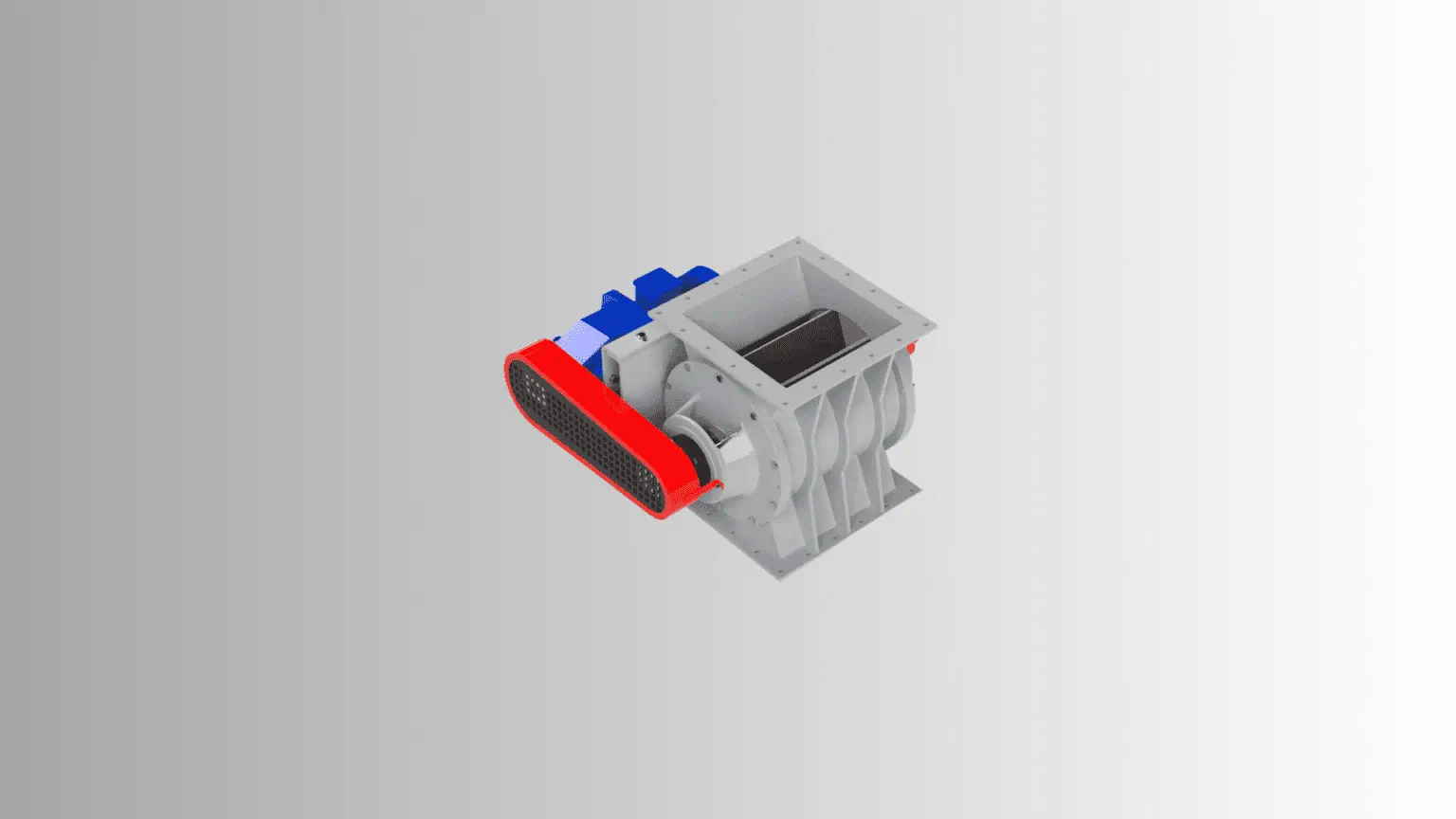
Rotary Valve (Airlock Valve)
The rotary valve is often called the heart of a pneumatic conveying system. It feeds material out of silos, hoppers, cyclones and filters at a steady rate while holding an air seal between two pressure zones. As a rotary valve manufacturer serving Canada, Oresys builds rotary airlock valves for cement, mining, chemical and food industry applications.
How a Rotary Airlock Valve Works
A rotor with several vanes turns inside a close-fitting housing. Material drops into the pockets between the vanes at the inlet, is carried round and falls out at the outlet. Because the vane tips run with only a small clearance to the housing, air leakage between the inlet and outlet is kept low. Output is set by rotor size and speed, which also makes the rotary valve an accurate volumetric feeder.
Rotary Feeder Valves for Cement and Abrasive Materials
Cement, raw meal, fly ash and mineral powders are abrasive. A rotary feeder valve for cement needs wear-resistant rotor and housing materials, the right clearances and shaft seals that keep fine powder away from the bearings. Selecting a valve for the material, not just the flange size, is what keeps it running.
Food Industry Rotary Valves
For food industry rotary valve applications such as flour, sugar and powders, stainless steel construction, smooth rotor pockets and easy cleaning access matter more than heavy wear protection.
Where Rotary Valves Are Used
- Under silos and hoppers for metered discharge
- Under cyclones and jet pulse filters for dust discharge
- Feeding pneumatic conveying lines
- Cement, mining, chemical, plastics and food plants
What We Need to Select Your Rotary Valve
- Material type, bulk density and particle size
- Required throughput
- Pressure difference across the valve
- Material temperature and abrasiveness
- Hygiene requirements (food-grade or not)
Frequently Asked Questions
What is a rotary airlock valve?
It’s a valve with a rotating vaned rotor that discharges bulk material at a controlled rate while maintaining an air seal between two pressure zones.
Rotary valve or slide gate for silo discharge?
A rotary valve meters and seals; a slide gate only opens and closes. Many systems use a slide gate above the rotary valve for maintenance isolation.
Why does a rotary valve wear out on cement?
Cement is abrasive and erodes vane tips and the housing bore, widening clearances and increasing air leakage. Wear-resistant materials and correct selection extend service life.
Do you manufacture rotary valves for Canadian plants?
Yes. We supply rotary airlock valves from Richmond, BC to plants across Canada.
Send Your Questions and Requests:
Contact Us Now
Our team is always ready to answer your questions and provide the best support for your needs.

