
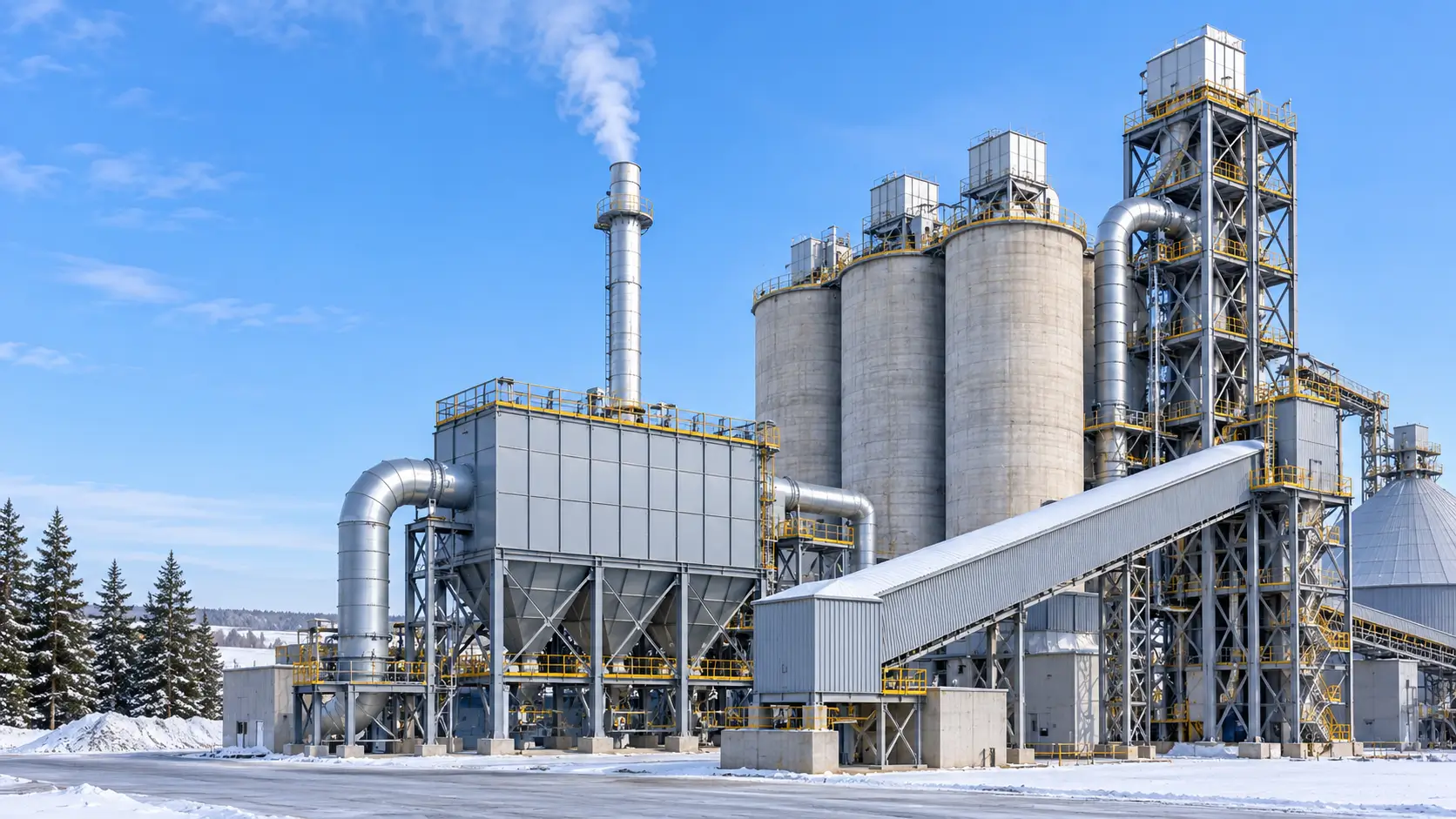
AI Summary
- Cement plant modernization in Canada helps reduce dust emissions, material spillage, and maintenance downtime.
- Conveyor upgrades improve material flow and reduce dust around transfer points.
- Silo top filters, bucket elevators and rotary airlock valves support cleaner cement production.
- Regular equipment inspections help prevent unexpected breakdowns.
- Modern cement plant equipment Canada facilities use can improve safety, reliability, and production efficiency.
Introduction
Canada’s cement industry is investing in cleaner and more reliable production. Amrize’s reported investment of over $1 billion in its Saint-Constant cement plant modernization, highlighted in June 2026, shows the growing importance of industrial upgrades. However, improvements do not always require large investments. Simple changes to conveyors, dust filters, and material handling equipment can also make a difference. Dust leakage, material spillage, and unexpected breakdowns increase operating costs and interrupt production. Choosing suitable cement plant equipment Canada facilities need helps address these challenges. Companies like Oresys can be contacted to discuss equipment requirements for efficient cement plant operations.
Why Is Cement Plant Modernization Important in Canada?
Cement plant modernization helps Canadian manufacturers improve equipment reliability, reduce waste and maintain cleaner production areas.
Cement plants handle limestone, clinker and fine cement powder. These materials can create dust and spillage during transportation, storage, and processing.
Older equipment may experience belt misalignment, damaged seals or blocked filters.
Modernization helps facilities:
- Reduce material losses.
- Improve conveyor performance.
- Lower maintenance requirements.
- Control airborne dust.
- Reduce unplanned shutdowns.
Canadian plants must also consider seasonal temperature changes, moisture, and equipment durability when planning upgrades.
How Do Conveyor Upgrades Reduce Cement Spillage?
Conveyor upgrades reduce spillage by improving belt alignment, material containment and transfer point design.
1. What Causes Conveyor Transfer Point Dust?
Conveyor transfer point dust forms when materials fall between conveyors or enter processing equipment.
The falling material releases fine particles, especially when transfer chutes are open or poorly sealed.
Common causes include damaged skirting, excessive drop heights, worn belt supports and incorrect belt tracking.
2. Which Conveyor Improvements Are Most Effective?
Several practical upgrades help control these problems.
- Belt skirting: Seals conveyor edges to prevent material leakage.
- Impact beds: Support belts beneath heavy material loading points.
- Belt cleaners: Remove leftover material from conveyor surfaces.
- Enclosed transfer chutes: Contain dust and improve extraction efficiency.
These improvements reduce cleanup work, protect conveyor components, and support continuous production.
How Do Dedusting Systems Improve Cement Plant Efficiency?
Dedusting systems capture airborne cement particles before they spread into working areas.
They are commonly installed near conveyor transfer points, silos, elevators, and material discharge locations.
1. How Does a Silo Top Filter Control Dust?
A silo top filter captures fine particles released during pneumatic cement filling.
As cement enters the silo, displaced air passes through filter elements. The filters trap dust while allowing cleaned air to escape.
Collected material can return to the silo.
Regular filter cleaning and inspection help maintain airflow and prevent excessive pressure buildup.
2. Why Are Dust Collection Systems Important?
Effective dust collection systems help facilities:
- Maintain cleaner production areas.
- Reduce airborne particle emissions.
- Recover valuable cement material.
- Reduce dust-related cleaning work.
Correct airflow, filter selection and maintenance are essential for dependable performance.
Which Material Handling Equipment Supports Cement Production?
Cement plants need reliable equipment to move bulk materials between production stages.
1. What Is a Bucket Elevator for Cement?
A bucket elevator for cement transports bulk material vertically using buckets attached to a belt or chain.
It is useful when materials must move between different plant levels without occupying excessive floor space.
Enclosed designs also help limit material escape.
Regular inspections of buckets, bearings, and drive components reduce mechanical failures.
2. How Does a Rotary Airlock Valve Work?
A rotary airlock valve controls the discharge of cement powder or collected dust while limiting unwanted airflow.
It is commonly installed beneath dust collectors, hoppers, and other bulk material handling equipment.
The rotating pockets discharge material at a controlled rate.
Proper maintenance helps prevent leakage, blockages, and unnecessary equipment wear.
How Can Canadian Cement Plants Reduce Downtime?
Canadian cement plants can reduce downtime through preventive maintenance and planned equipment upgrades.
What Maintenance Practices Should Plants Follow?
Important maintenance activities include:
- Inspecting conveyor belts and rollers.
- Checking transfer point seals.
- Monitoring dust collector pressure differences.
- Replacing damaged filter elements.
- Inspecting bucket elevator components.
- Checking rotary valve operation.
Scheduling major repairs during planned shutdowns helps avoid unnecessary production interruptions.
Where Can Canadian Cement Plants Find Equipment Solutions?
Choosing suitable equipment requires understanding material characteristics, production capacity, installation space and maintenance needs.
Oresys is a Canadian contact for businesses exploring industrial equipment requirements and potential cement plant upgrades.
Contact Oresys for Cement Plant Equipment
Looking to improve conveyor performance, reduce dust or upgrade your bulk material handling equipment? Share your facility needs with us and we’ll find solutions that work.
- Phone: +1 (604) 354 49 57 | +1 (604) 340 54 44
- Email: info@oresys.ca
Frequently Asked Questions (FAQs) –
Q. What equipment is commonly used in Canadian cement plants?
A. Belt conveyors, bucket elevators, silos, dust collectors, rotary airlock valves and feeding systems are used in cement plants to handle the material efficiently.
Q. How can cement plants reduce conveyor dust?
A. Enclosed transfer points, belt skirting, proper chute design, and dust extraction systems help prevent dust from spreading.
Q. What is the main purpose of a silo top filter?
A. A silo top filter captures fine cement particles during silo filling, reducing airborne dust and preventing unnecessary material loss.
Q. How do conveyor upgrades help reduce downtime?
A. Improved belt tracking, stronger belt supports and effective sealing reduce equipment wear, material buildup and frequent cleaning interruptions.
Q. Why should Canadian cement plants invest in modernization?
A. Modernization improves production reliability, helps control dust, reduces waste of materials and helps facilities operate more efficiently.